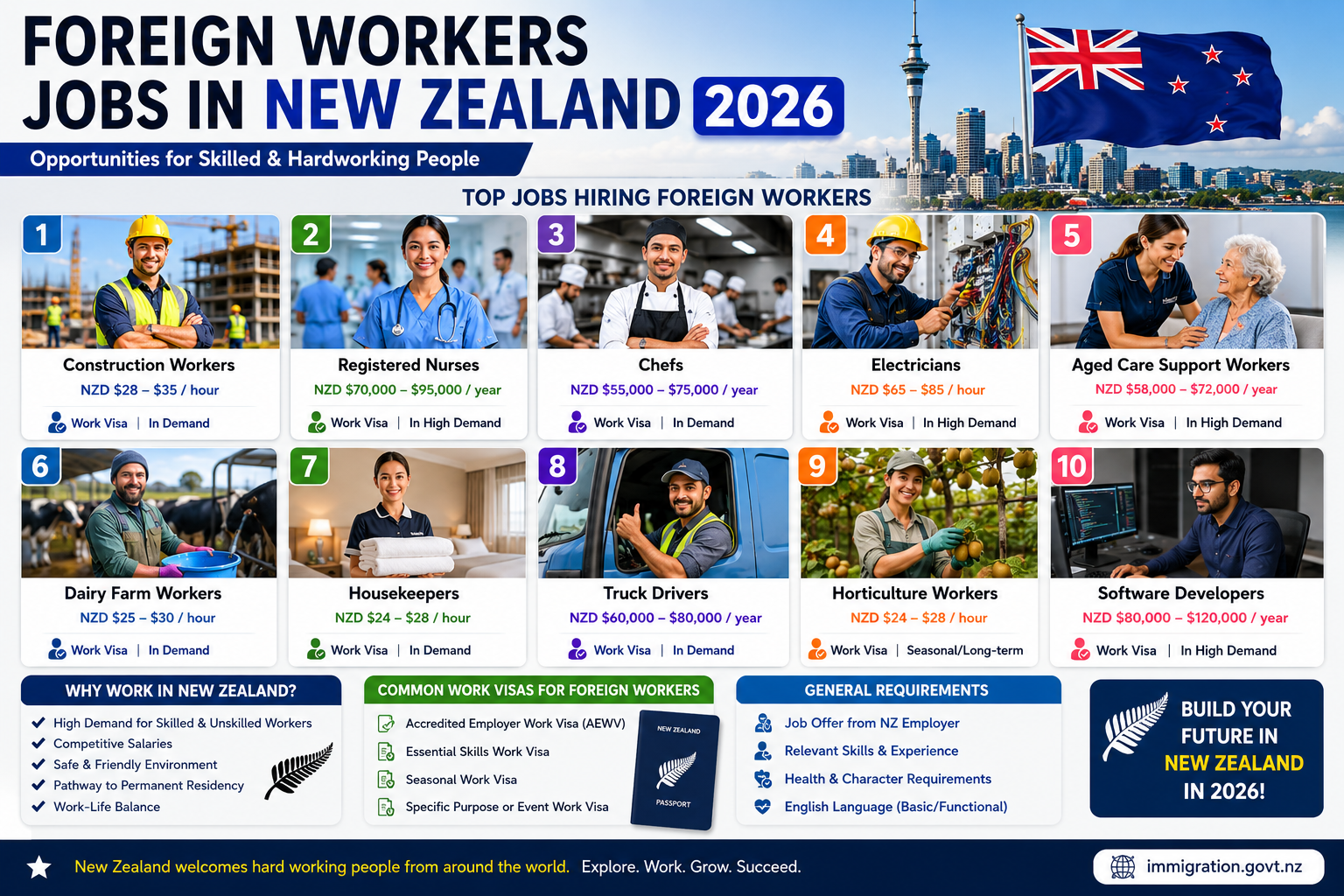
How Foreign Workers Can Find Jobs in New Zealand in 2026
New Zealand remains a popular destination for skilled migrants seeking career opportunities and a high quality of life. However, securing employment in 2026 requires preparation, strategic job searching, and an understanding of the country’s immigration and labor market conditions.
The first step for foreign workers is identifying occupations that are currently in demand. New Zealand’s Green List highlights professions experiencing persistent skills shortages. Healthcare professionals, engineers, teachers, and many technology specialists often enjoy better employment prospects and easier immigration pathways.
Creating a New Zealand-style CV is essential. Employers generally prefer concise resumes that emphasize practical achievements, relevant qualifications, and measurable results. Including local references or professional certifications can strengthen an application. Job seekers should also tailor each application to match the specific requirements of the advertised role.
Online job portals remain the primary method of finding vacancies. Many employers advertise positions through national employment websites and recruitment agencies. Networking is equally important. Professional associations, industry events, and LinkedIn connections can provide access to opportunities that may not be publicly advertised.
Understanding visa requirements is another critical factor. New Zealand continues to update its Skilled Migrant Category and Accredited Employer Work Visa programs. Several changes in 2026 aim to simplify pathways for qualified workers while maintaining standards related to skills, wages, and English proficiency.
Applicants should research whether their occupation appears on official shortage lists and whether an employer is accredited to hire overseas workers. Working with accredited employers often simplifies the immigration process and improves the likelihood of obtaining a work visa.
Foreign workers should also prepare for a competitive hiring environment. While shortages exist in certain industries, employers may prioritize candidates who already have work authorization or local experience. Building professional networks and demonstrating a commitment to relocating can help overcome these challenges. Community discussions indicate that persistence and targeted applications are often necessary for success.
Language proficiency remains important. Effective communication skills can significantly improve job prospects and workplace performance. Recent policy updates have reinforced English language requirements for some work visa categories.
Despite increased competition, New Zealand continues to offer attractive opportunities for skilled professionals. By focusing on high-demand sectors, understanding immigration requirements, and maintaining a professional job-search strategy, foreign workers can successfully build rewarding careers in the country.